
Arizona Window Tint Laws: A Tucson Driver's Starting Point
Quick answer
Arizona window tint rules are most important for front side windows and windshield work. A Tucson tint quote should separate side glass, rear glass, full windshield film, and a windshield strip so the installer can talk through shade, reflectivity, visibility, and legal limits.
Arizona tint law should be checked before choosing film for front side glass or windshield work. The official Arizona statute references front side windows with 33% light transmission, plus or minus 3%, and 35% luminous reflectance, plus or minus 3%. It also includes requirements related to windshield top-strip placement and color.
This is not legal advice. It is a reminder that shade choice and legal compliance are not the same thing. A tint that looks right on one vehicle might not be appropriate for a different window location, driver need, or state requirement.
Before installation, ask which glass areas are being tinted, what shade is being recommended, whether the windshield is involved, and how the choice relates to Arizona Revised Statutes Section 28-959.01.
What Tucson drivers should ask
- What shade is being recommended for the front side windows?
- Is the windshield part of the quote, or only a top strip?
- Will the film color and reflectivity fit Arizona requirements?
- How will the selected film affect night visibility for the driver?
This matters because tint conversations can get casual very quickly. A friend might describe a shade by percentage, a photo might make the film look lighter or darker than it really is, and different glass locations on the same vehicle can have different rules. The quote should slow that down enough to make a clear choice.
Back windows and rear side windows are often discussed differently from front side glass, but the installer still needs to know what the customer wants. Privacy for passengers, glare control for kids in the back seat, and a uniform exterior look are all reasonable goals. They should be balanced with safe visibility and current Arizona requirements.
Windshield strips deserve special attention. A strip can help with low sun and desert glare, but placement and color restrictions matter. If a driver is considering windshield work of any kind, it belongs in the estimate request from the beginning.
Why this belongs in the estimate
A responsible tint quote should not treat Arizona law as a footnote after the customer has already chosen a shade. The shop needs to know the window location, the customer's privacy goals, and whether the request involves front side glass or the windshield. Those details change the conversation before the film is ever cut.
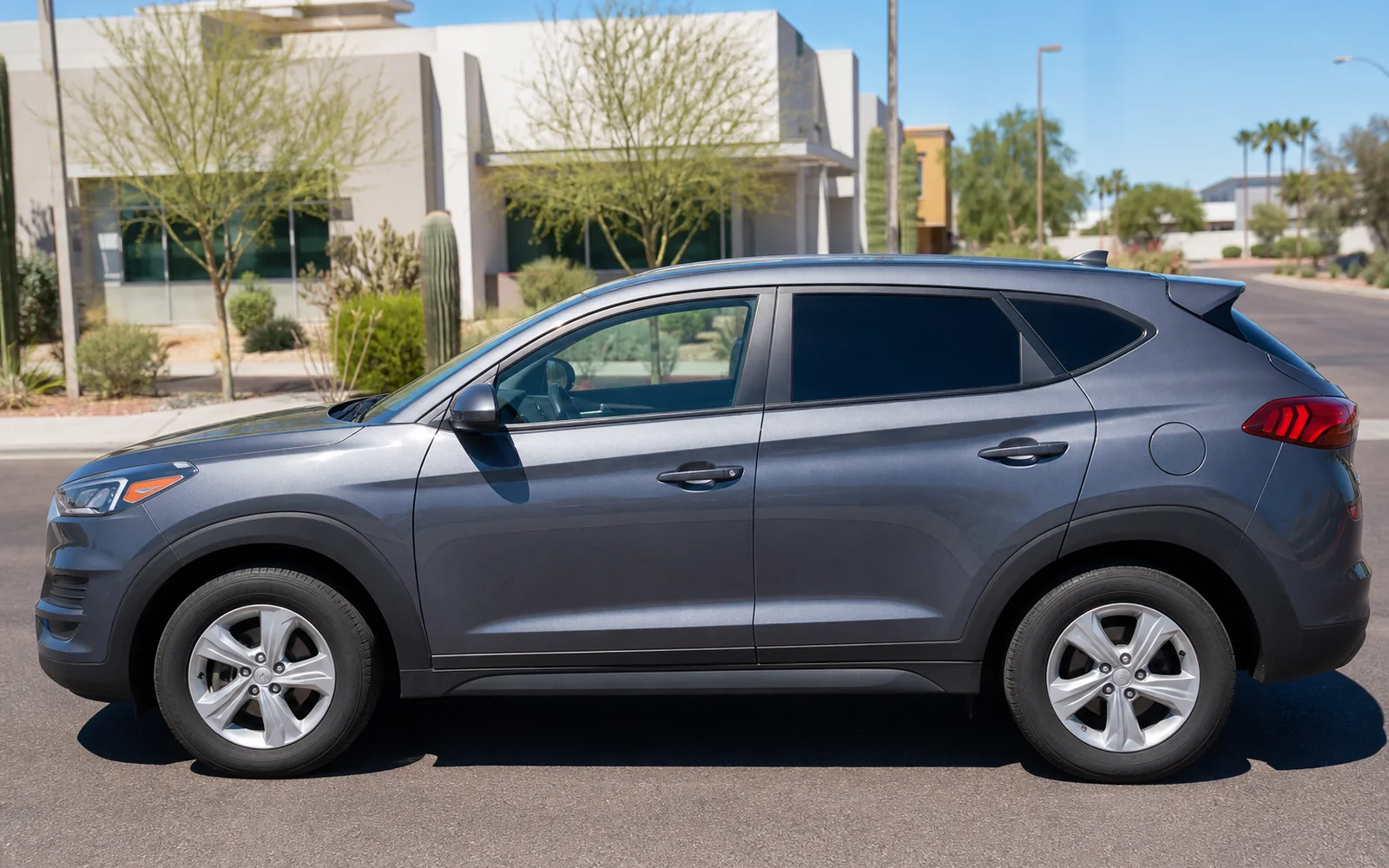
Customers should also be careful with online photos. Lighting, camera exposure, factory glass, and interior color can all change how dark a tint appears. Two vehicles with the same film can look different depending on the angle and background. That is another reason to ask the installer for a recommendation instead of copying a photo from another car.
Dawn Till Dusk can help customers keep the conversation simple: identify the glass, discuss the goal, review the legal context, then choose a film that makes sense for the vehicle and the driver.
That structure also protects the customer from comparing incomplete quotes. One price may include removal, a windshield strip, or premium ceramic film, while another may only include side and rear windows with a different film line. Asking what is included makes the quote easier to understand.
When in doubt, use the estimate form to describe the desired look and the glass areas involved. Dawn Till Dusk can follow up with a recommendation that is grounded in the vehicle and Arizona requirements instead of a guess.