
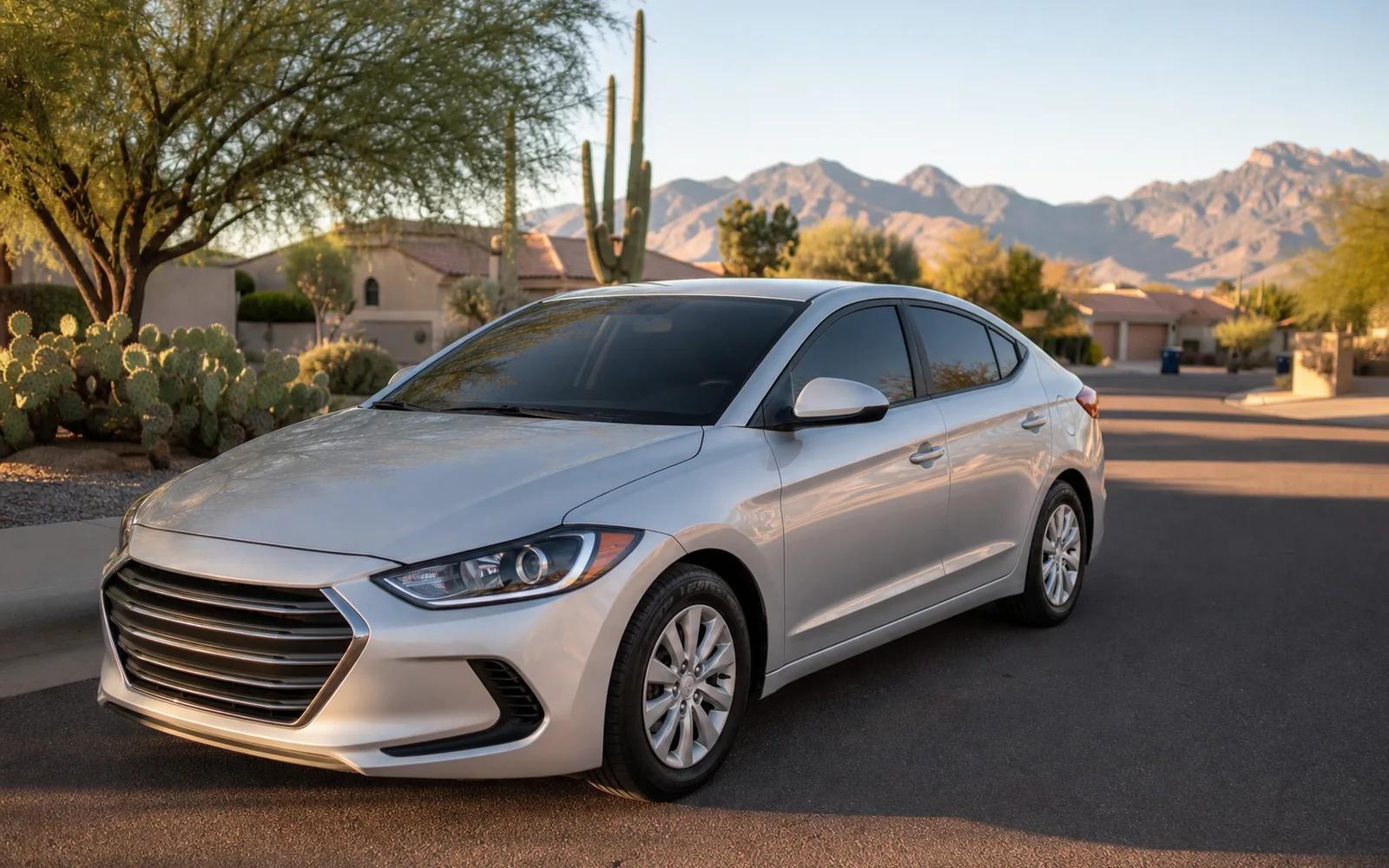
Ceramic Window Tint in Tucson: What Drivers Should Know
Quick answer
Ceramic window tint is usually the best fit for Tucson drivers who care about heat control, glare reduction, and a clean non-metal appearance. Shade still matters, but film construction matters too, especially when a vehicle sits in open sun at work, school, grocery stores, or trailheads.
Ceramic window tint is popular in Tucson because drivers are usually trying to solve more than appearance. The real goals are cooler cabin feel, less glare, more comfort during afternoon errands, and better protection for the dashboard, seats, and trim.
SunTek describes its automotive tint as a way to improve both the look and performance of vehicle glass, with film technologies ranging from dyed charcoal to ceramic nanoparticle construction. Its Evolve ceramic line is listed with up to 94% selective infrared rejection, while CIR is positioned as a ceramic construction that supports heat, infrared, and UV protection.
For most Tucson vehicles, the best film is not automatically the darkest option. The better conversation is about how much heat the vehicle gets, how the driver wants it to look, whether visibility matters at night, and whether the owner wants side glass, rear glass, a windshield strip, or a full package.
Why ceramic film fits Tucson driving
Tucson heat is not a one-time problem. It shows up every time a car is parked outside, every time the driver turns west in the afternoon, and every time passengers climb into a cabin that has been absorbing sun through the glass. Ceramic film is built for that kind of repeated comfort problem because it can improve heat and infrared rejection without relying on a metallic look.
That non-metal construction is one reason ceramic film is often attractive on newer vehicles. Customers do not want a tint choice that fights with modern electronics, phone reception, navigation, or keyless systems. The right film still needs to be selected by the installer, but ceramic options are a strong place to start for daily drivers.
What affects the quote
- Year, make, and model, because glass size and trim shape change labor.
- Whether old film has to be removed before new film can be installed.
- Which glass areas are included: front doors, rear doors, back glass, windshield, or strip.
- The balance between appearance, heat performance, privacy, and night visibility.
A good quote conversation should feel specific. Instead of asking only for the darkest legal film or the cheapest package, Tucson drivers get a better result when they describe how the car is used. A commuter parked outside all day may need a different recommendation than a weekend vehicle that spends most of its life in a garage.
Ceramic tint is not automatically the right answer for every budget, but it is a serious option when the problem is comfort. Dawn Till Dusk can compare SunTek options, explain the look, and help match the film to the way the vehicle is actually driven.
Common Tucson use cases
Ceramic film is especially worth discussing for drivers who spend long afternoons around I-10, Broadway, Speedway, Oracle, or Kolb, where a short stop can turn into a hot cabin. It also makes sense for rideshare drivers, parents with children in the back seat, and anyone who keeps a vehicle for years and wants to reduce interior wear from sun exposure.
The quote should still stay grounded. If the car already has factory privacy glass in the rear, the front doors may need a different shade conversation than the back half of the vehicle. If the driver is sensitive to glare but drives dark roads at night, the installer should explain which shade keeps the vehicle comfortable without making visibility feel strained.