
How to Choose a Tint Shade Without Guessing
Quick answer
The best tint shade is the shade that fits the glass location, legal limits, visibility needs, privacy goal, and desired exterior look. Do not choose only from a photo; compare the goal and the film construction first.
Tint shade should start with the customer's goal. Privacy, cabin comfort, glare reduction, legal compliance, and appearance all matter, but they do not always point to the same choice.
A darker look may be appealing, but it is not the only way to improve comfort. Modern film lines can offer performance differences based on construction, not just darkness. That is why ceramic, metal-dyed, and solar architectural films should be compared by use case instead of shade alone.
The best estimate conversation covers the glass location, the user's driving or room habits, the preferred exterior look, and how much night visibility matters. Guessing from a photo rarely tells the whole story.
A better shade decision framework
- Start with the problem: heat, glare, privacy, fading, appearance, or comfort.
- Separate vehicle glass from home or commercial glass.
- Ask what needs to stay visible at night or from inside the room.
- Review legal requirements before choosing front side or windshield film.
Shade percentages can be confusing because customers often use them as a shortcut for both darkness and performance. A darker film usually looks more private, but heat performance depends heavily on the film line and construction. Ceramic film, metal-dyed film, and architectural solar film can all behave differently.
For homes and businesses, the outside appearance may matter as much as the inside comfort. A homeowner may want a subtle film that preserves views, while a storefront may want a more polished, private, or reflective finish. Both are valid, but they should not be selected with the same assumptions.
For vehicles, the installer should talk through front side glass, rear glass, back glass, and windshield options separately. Dawn Till Dusk can help customers choose a shade that looks good, solves the right comfort problem, and avoids surprises after installation.
Why photos can mislead
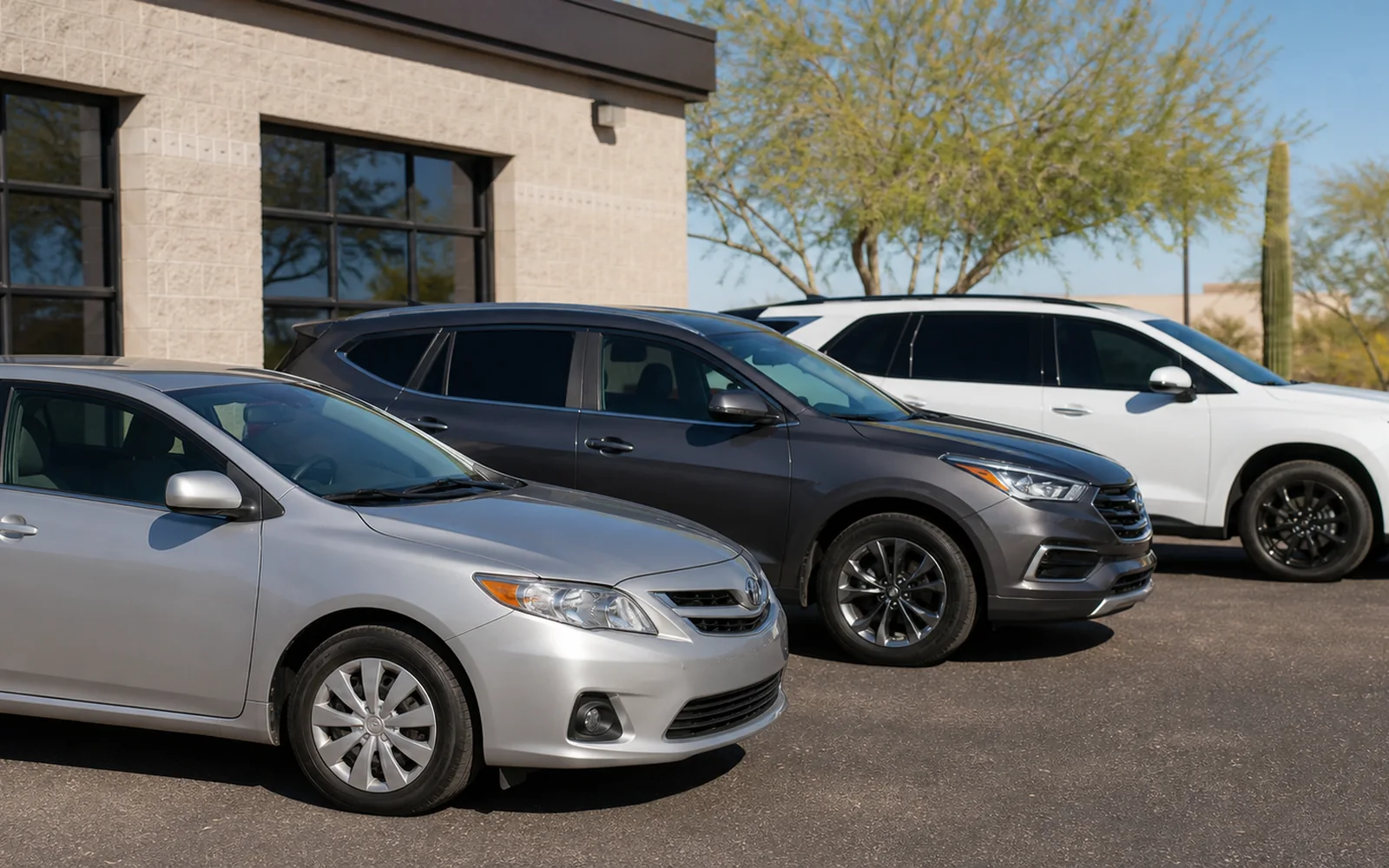
A tint photo is affected by the car's interior color, the angle of the sun, the brightness behind the vehicle, and whether the camera adjusted exposure. That is why a shade that looks perfect online can look different on a white truck, a black sedan, or a vehicle with factory privacy glass.
Customers should bring example photos if they like a certain look, but the final decision should still happen through a real shade and film conversation. The installer can explain what is realistic, what is legal, and what will fit the customer's driving habits.
For home or commercial glass, photos are even less reliable because the goal may be privacy, glare reduction, interior comfort, or exterior appearance. A film that looks right on a storefront could feel too reflective on a living room window. The right shade depends on the job.
Customers should also remember that shade is only one part of the film choice. A lighter ceramic film may solve a comfort problem better than a darker basic film, depending on the product line. A reflective architectural film may help a storefront but feel wrong for a room where the owner wants a natural view.
Dawn Till Dusk can make shade selection less stressful by narrowing the choice around the customer's real goal first. Once the purpose is clear, the installer can recommend a film and shade that match the glass, the property, and the way the customer uses the space.