
How Home Window Tint Helps West-Facing Rooms in Tucson
Quick answer
Home window tint can make west-facing Tucson rooms more usable by reducing heat, glare, and UV exposure through the glass. It is especially helpful in rooms that get uncomfortable in the afternoon even when the air conditioning is already running.
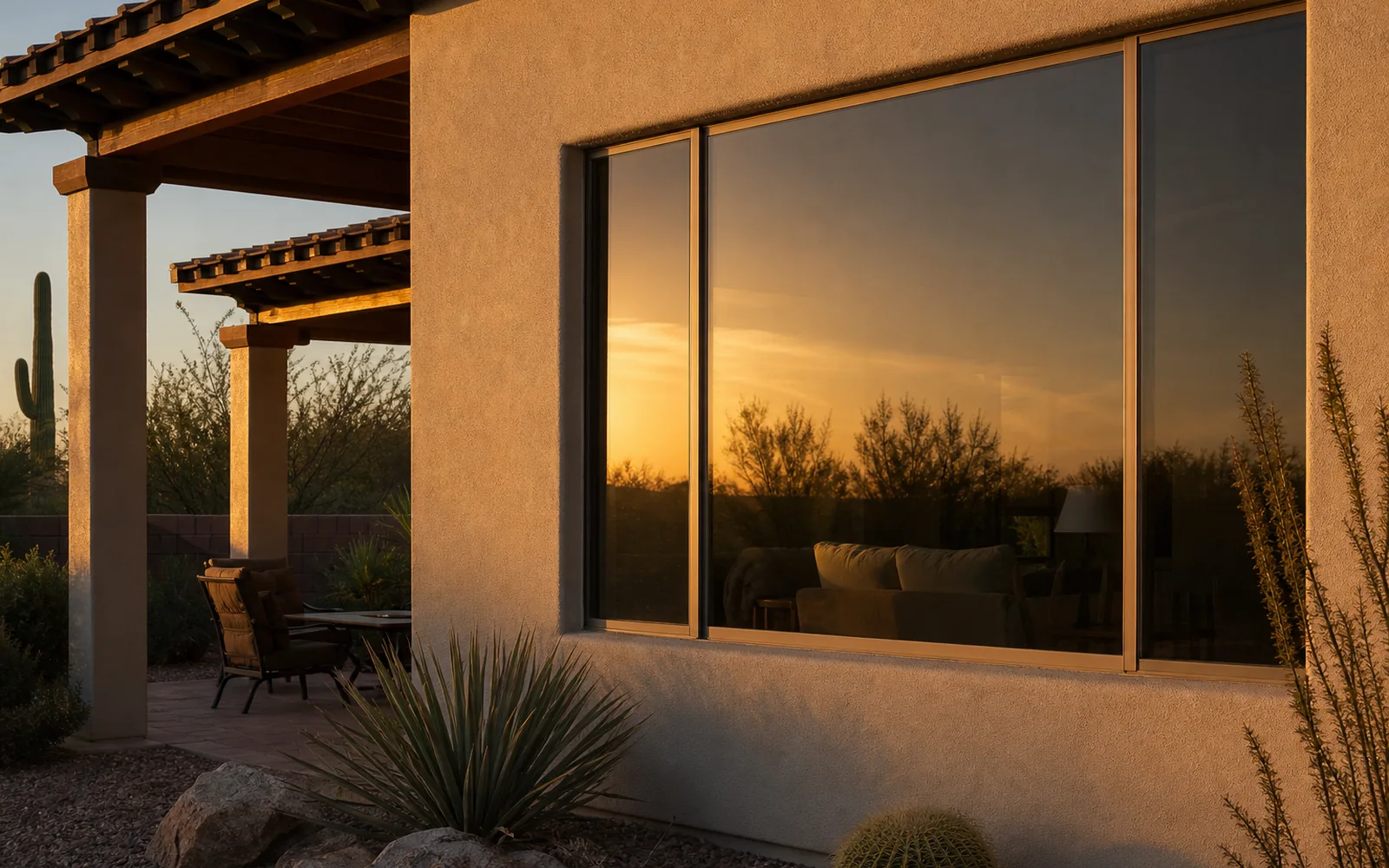
West-facing rooms in Tucson often take the hardest afternoon sun. That can make a living room, office, bedroom, or sliding glass door area feel warmer than the rest of the house, even when the air conditioning is working.
Residential solar film helps by changing how the glass handles sunlight. SunTek says residential solar film helps homeowners enjoy natural sunlight with less unpleasant heat, glare, and harmful UV rays. Its solar film page also lists 98% to 99% blocking of interior-fading UV rays, depending on the product.
A good estimate starts with the direction the windows face, the size of the glass, the room's use, and whether the homeowner wants a subtle or more reflective look.
Signs a room may be a good fit
- The room is comfortable in the morning but hot or bright after lunch.
- TVs, monitors, or tablets are hard to see near the windows.
- Furniture, rugs, flooring, or artwork near the glass show fading.
- Closing blinds helps but makes the room feel dark or unusable.
Window tint is not the same as blackout shades. Many homeowners want to keep daylight and views while softening the sun's impact. That is where a residential solar film conversation can be more useful than simply adding heavier window coverings.
The best estimate starts with the problem room, not only the total number of windows. A sliding glass door facing west may matter more than three smaller windows on a shaded wall. Dawn Till Dusk should know which rooms feel worst, what time of day the problem happens, and whether privacy is part of the goal.
Homeowners should also think about appearance from both sides of the glass. Some films are chosen for a more subtle look, while others add more reflectivity or privacy. A good recommendation balances comfort, visibility, neighborhood appearance, and the way the room is used every day.
Why a local assessment matters
Tucson homes can have very different glass problems from one room to the next. A shaded north-facing bedroom may not need the same help as a west wall with large panes, a patio slider, or a home office where the desk sits near the window. Treating the whole house as one generic tint project can lead to a film that is too aggressive in some rooms and not effective enough in others.
A local installer should ask about the daily pattern. Does the room heat up after school pickup? Is the glare worst during work hours? Does the owner want to keep blinds open for natural light? Those answers help turn a vague "my house is hot" request into a film recommendation that matches how the home is actually lived in.
Photos can help, but rough measurements and window direction are even more useful. For a fast first estimate, homeowners can send the number of panes, approximate dimensions, the room name, and a note about when the sun feels worst.
A homeowner should also mention pets, children, plants, or furniture near the glass. Those details help explain why glare, heat, or UV protection matters in that room. A room used every day deserves a different level of attention than a guest room that only gets occasional sun.
The bottom line: home tint should be quoted as a comfort improvement for a specific room or set of rooms. The better the installer understands the room, the easier it is to recommend a film that feels natural after it is installed.